

ICE Agent Charged in Minnesota: A Closer Look at the Possible Defenses
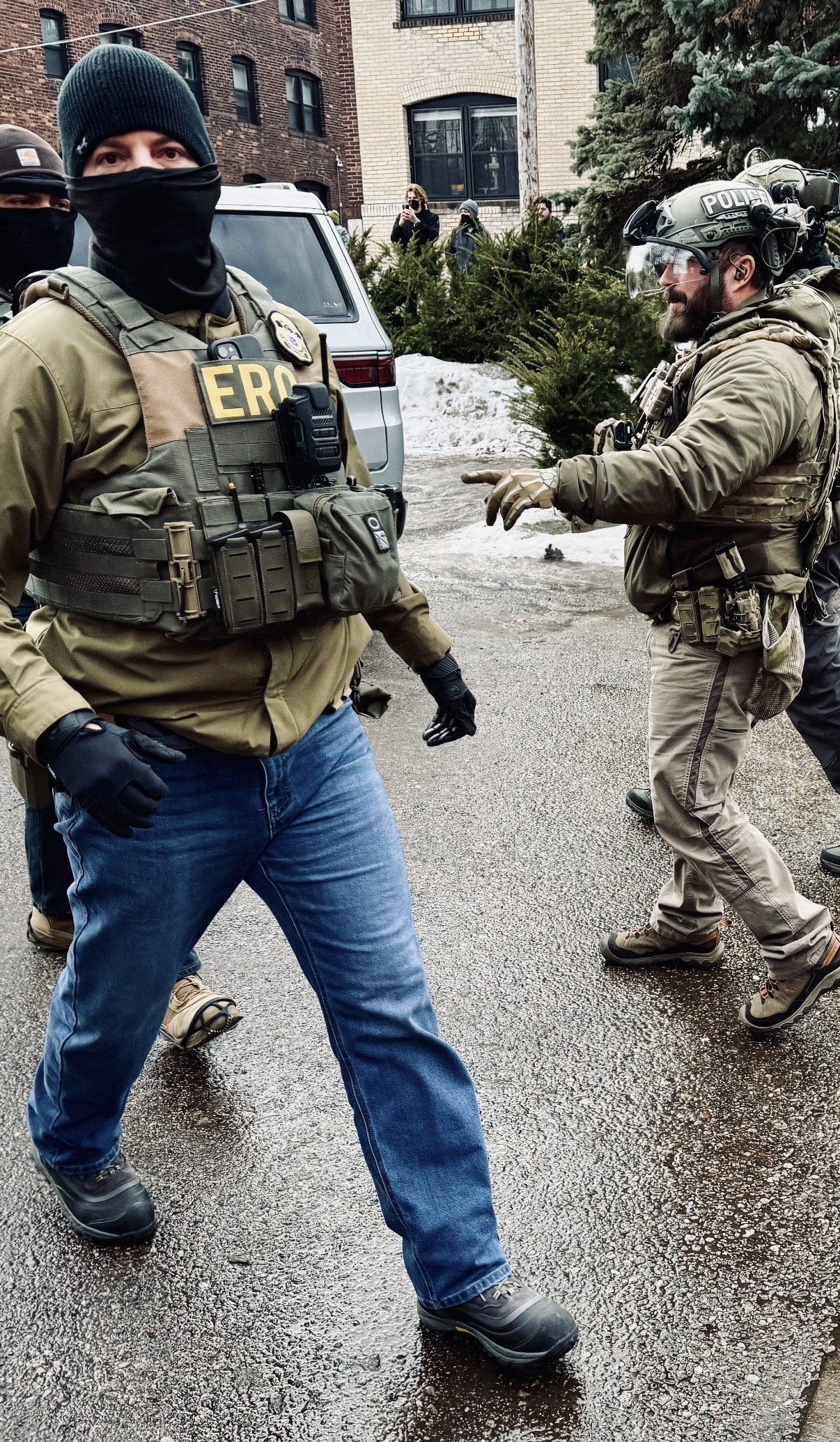
Photograph by Jack Rice during a Direct Confrontation with an U.S. ICE Agent on a Street in the Twin Cities
By Jack Rice, Criminal Defense Attorney & Legal Analyst
The recent felony assault charges filed by the Hennepin County Attorney’s Office against an ICE agent have captured attention across the Country and certainly here in Minnesota as well. While the allegations are serious—reportedly involving the display of a firearm during a highway incident—the legal conversation shouldn’t stop at what’s been charged. It should also focus on what comes next: the defense. As a former prosecutor, former Federal Agent and a criminal defense attorney in the Twin Cities, I have dealt with a Felony 2nd Degree Assault charges many many times. And let’s be clear, the ramifications are for real. If you are facing charges , contact Jack Rice Defense for a free confidential consultation at 651-447-7650 or 612-227-1339.
Because in any criminal case, especially one involving law enforcement, the real story often unfolds in the courtroom, often at the rpetrial level. .
Presumption of Innocence Still Applies
Before diving into legal strategy, it’s worth stating the obvious but essential truth: anyone charged with a crime is presumed innocent. That includes federal agents, local officers, and everyday citizens alike.
Charges are not convictions. They are the beginning of the legal process—not the end. And again, lets be clear, this is going to be a huge fight.
Key Defense #1: Self-Defense or Defense of Others
One of the most likely defenses in a case like this is self-defense.
If the ICE agent reasonably believed that he—or someone else—was facing an imminent threat of bodily harm, the law may justify displaying or even using a firearm. The key word here is “reasonable.” It’s not just about what the agent believed, but whether that belief would make sense to an ordinary person under the same circumstances.
In fast-moving situations—like a highway confrontation—perception matters. And perception can be flawed, incomplete, or influenced by stress. And again, the burden is upon the State to prove that a crime took place at all.
Key Defense #2: Authority as a Federal Agent
Another critical issue is whether the agent was acting within the scope of his federal duties.
Federal law enforcement officers are often granted broader authority than civilians when it comes to the use of force. If the defense can establish that the agent was performing official duties and responding to what he perceived as a legitimate threat or law enforcement concern, that could significantly shape how the case is evaluated.
This doesn’t create automatic immunity—but it can raise the bar for prosecution.
Key Defense #3: Federal Supremacy and Immunity
This is where the case gets particularly complex.
Under what’s often referred to as the Supremacy Clause defense, federal officers may be protected from state prosecution if they were performing their duties and did not act in a way that was clearly unlawful. Remember this is huge because there really isn’t examples of how this will play out and the Courts will regularly defer to Officers in the field. This really does matter.
In practical terms, the defense may argue:
The agent was carrying out federal responsibilities
His actions were tied to those responsibilities
The conduct, even if aggressive, was not criminal under federal standards
If successful, this argument could limit—or even eliminate—the state’s ability to prosecute. Also, remember that the Defense should argue that if you allow the State to dictate what the Feds and Federal officers can do, it will stop them from doing what Federal agents are allowed to do.
Key Defense #4: Lack of Intent
Second-degree assault charges often require proof that the defendant intended to cause fear of immediate bodily harm.
Intent is not always easy to prove.
Was the firearm displayed to threaten—or to warn? Will that matter? How will a jury see this?
Was it pointed deliberately—or momentarily in a chaotic situation?
Was there a misunderstanding between the parties involved?
If the defense can raise reasonable doubt about intent, the prosecution’s case becomes significantly weaker.
Key Defense #5: Credibility and Evidence
As in any criminal case, credibility will be everything.
Are witness accounts consistent?
Is there dashcam or surveillance footage?
Do physical facts line up with the allegations?
Even small inconsistencies can matter. A strong defense will carefully examine every piece of evidence, looking for gaps, contradictions, or alternative explanations.
Why This Case Matters
This case sits at the intersection of federal authority and state accountability, but at its core, it reflects something much more universal: how the legal system evaluates human behavior under pressure.
Split-second decisions. Incomplete information. High stakes.
These are the realities that shape many criminal cases—not just this one.
Facing Charges? Get the Right Defense
If you are facing criminal charges in Minneapolis, St. Paul, or anywhere in the Twin Cities and surrounding counties, you need a defense strategy built on experience, precision, and a deep understanding of how prosecutors think.
At Jack Rice Defense, we focus on exactly that—protecting your rights and building the strongest defense possible from day one.
Contact us today for a free, confidential consultation at 651-447-7650 or 612-227-1339.
Because when you’re charged with a crime, the defense isn’t just important—it’s everything.