

Jack Rice Appears on KSTP-TV to Discuss Warrants, the Fourth Amendment, and Search & Seizure
When law enforcement executes a warrant, the Constitution still matters.
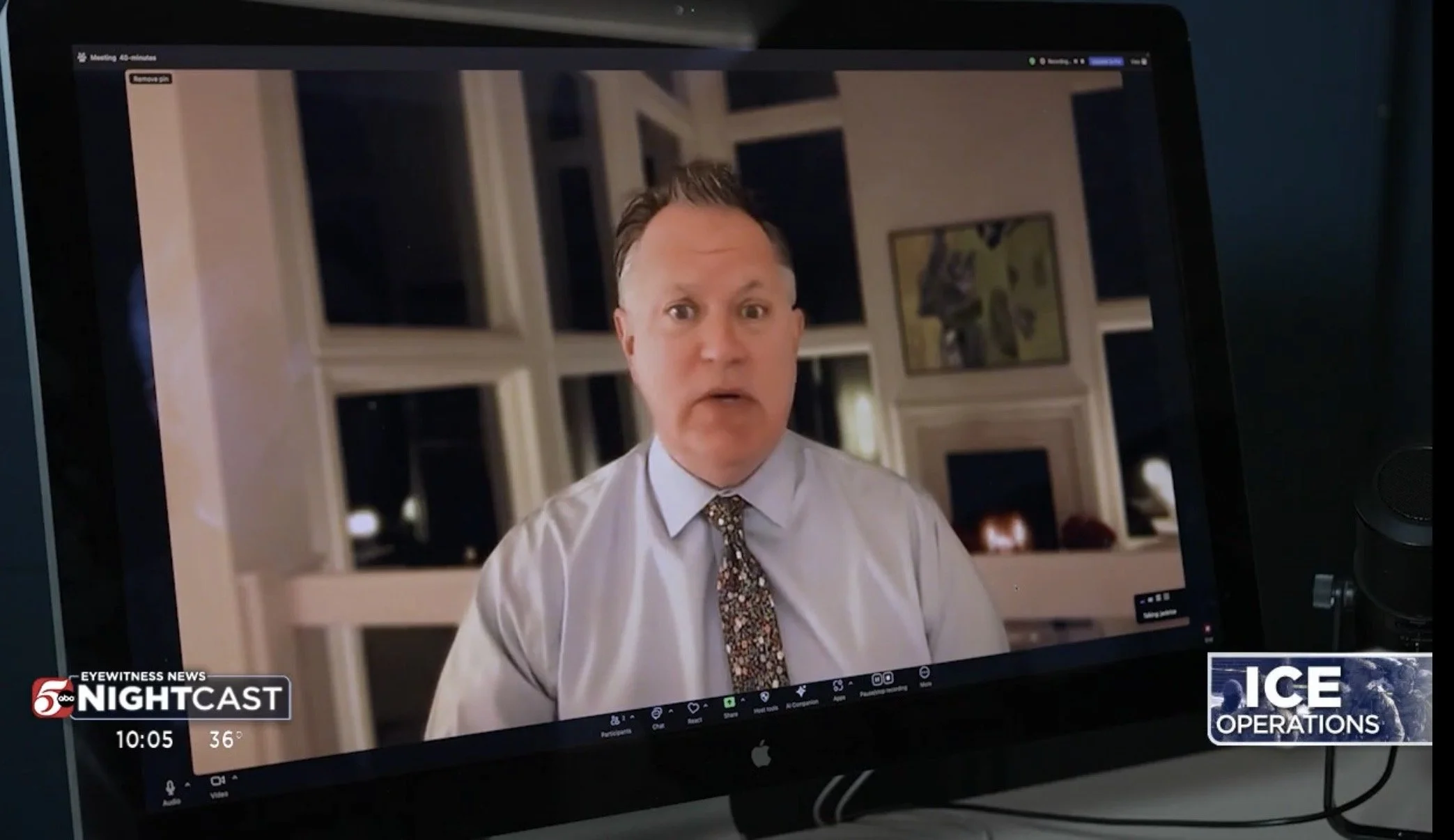
Longtime Minnesota criminal defense attorney Jack Rice recently appeared on ABC Affiliate KSTP-TV (5 Eyewitness News) to discuss a high-profile federal case involving allegations of cyberstalking and threats against Immigration and Customs Enforcement (ICE) officers. While the case itself has drawn national attention, Jack Rice’s analysis focused on a core issue that affects every criminal case: the limits of law enforcement authority under the Fourth Amendment.
The Case Raising Constitutional Questions
According to reporting by KSTP and The Associated Press, a Minneapolis man has been charged federally with cyberstalking and threatening ICE officers. The complaint alleges that the defendant made online threats and engaged in doxing, with the case filed in Michigan due to the alleged location of one of the victims.
During the arrest, witnesses raised concerns about how federal agents entered the apartment complex—reportedly breaking a window to gain access to a common area. Those details matter, because how officers execute a warrant can be just as important as whether they have one at all.
What the Fourth Amendment Requires
In his KSTP interview, Jack Rice emphasized a principle that is often misunderstood:
“You can only do what the warrant allows you to do. You can’t simply stretch it like bubble gum.”
The Fourth Amendment protects people from unreasonable searches and seizures. That means:
A warrant must clearly define where officers are allowed to go
Officers generally cannot search areas not listed in the warrant
Entry into common areas or other residences may raise serious legal challenges if not authorized
Even with a warrant, law enforcement must follow strict constitutional boundaries
As Jack explained on KSTP, if a warrant authorizes entry into one specific apartment, that does not automatically grant permission to access other apartments—or to force entry through areas not covered by the warrant.
Why This Matters in Criminal Cases
Search-and-seizure issues are not technical loopholes—they are fundamental constitutional protections. When law enforcement oversteps, it can lead to:
Suppression of evidence
Dismissal of charges
Reduced charges or leverage in negotiations
In serious state and federal cases, Fourth Amendment violations can change everything. That’s why experienced criminal defense counsel carefully examines every warrant, every entry, and every action taken by law enforcement.
Experienced Criminal Defense in Minnesota
Jack Rice has spent decades defending people charged with serious crimes in Minnesota. He is frequently called upon by the media to explain complex legal issues because he understands both the law and how it is applied in real-world cases.
If you or someone you love is facing serious criminal charges in Minnesota—state or federal—you need an attorney who knows how to challenge unlawful searches, flawed warrants, and government overreach.
Contact Jack Rice Defense
If you are under investigation or have been charged with a crime, do not wait.
📞 Free, confidential consultation:
651-447-7650 or 612-227-1339
Jack Rice Defense — protecting your rights, your freedom, and the Constitution when it matters most.