

Minnesota DWI Arrests: How Field Sobriety Tests and Chemical Testing Affect Your Case
By Sullivan Rice
A DWI arrest in Minnesota can be overwhelming. Many people believe that once an officer makes an arrest or a test result comes back above the legal limit, the outcome of the case is already decided.
That is not how the legal process works.
A DWI charge involves multiple layers of evidence, legal requirements, and investigative procedures. Every part of the process—from the initial traffic stop to chemical testing—must be carefully examined to determine whether the state can prove its case.
The Traffic Stop Is the First Important Step
A DWI case often begins with a traffic stop based on an officer's observations.
Law enforcement may stop a driver after observing behaviors such as:
Swerving or inconsistent driving.
Speeding or other traffic violations.
Delayed reactions.
Equipment violations.
Signs of possible impairment.
However, a stop must be legally justified. An experienced defense attorney may examine whether officers had the proper basis to initiate the stop and whether your constitutional rights were protected from the beginning.
If the initial stop was unlawful, it may affect the evidence that follows.
Understanding Field Sobriety Tests
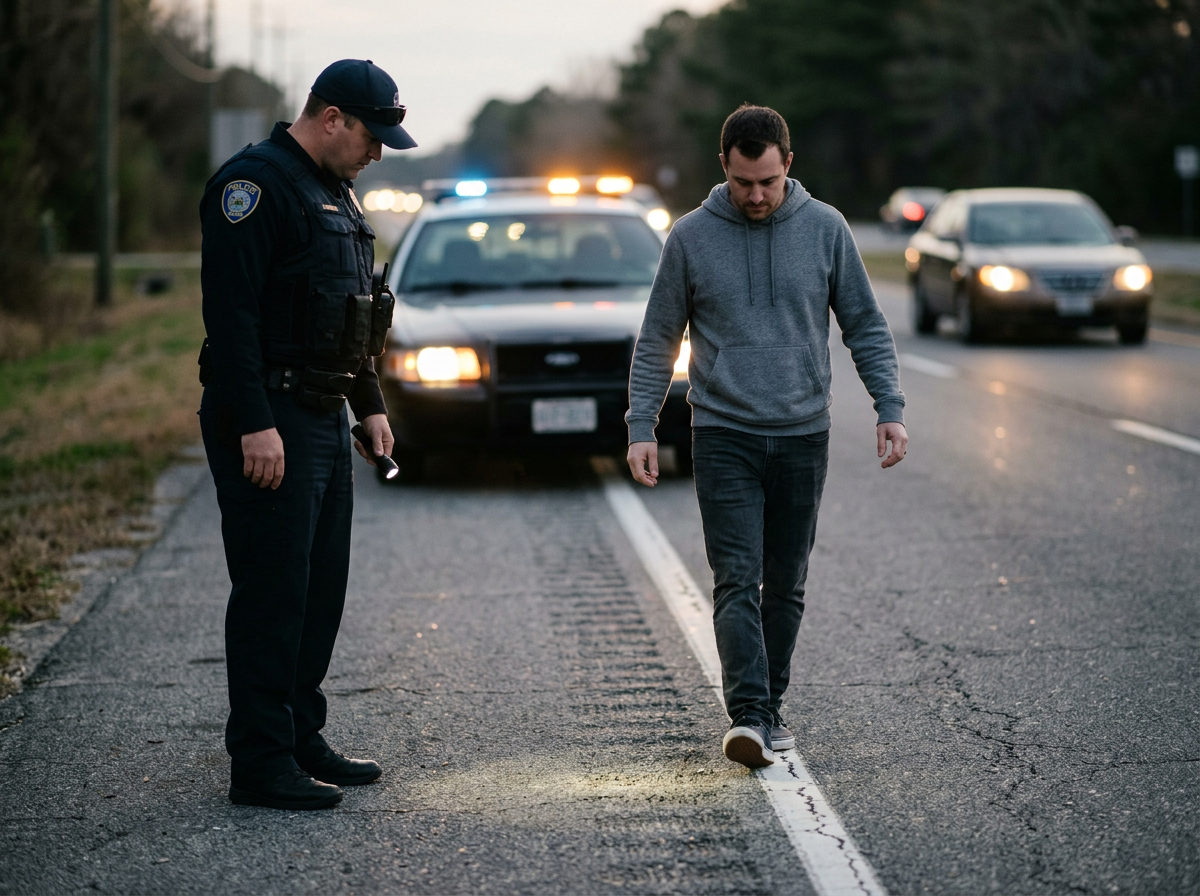
Many DWI investigations involve standardized field sobriety tests.
These tests are designed to help officers evaluate possible impairment, but they are not perfect. Performance can be affected by many factors unrelated to alcohol or drug use, including:
Medical conditions.
Balance issues.
Fatigue.
Stress or nervousness.
Weather conditions.
Road surfaces.
Footwear.
Instructions provided by the officer.
A poor performance on a field sobriety test does not automatically prove impairment. Each test must be viewed in the context of the entire situation.
Chemical Testing Evidence Is Not Always Simple
Minnesota DWI cases may involve breath, blood, or urine testing.
While chemical tests can provide important evidence, questions may arise about:
Whether the test was administered correctly.
Whether proper procedures were followed.
Whether equipment was maintained and functioning properly.
Whether the sample was handled appropriately.
Whether the results accurately reflect impairment at the time of driving.
Testing evidence requires careful review rather than automatic acceptance.
Minnesota's Implied Consent Law
Minnesota drivers are subject to implied consent laws regarding chemical testing in certain circumstances.
Refusing a chemical test can lead to separate legal consequences, including potential driver's license issues. However, the circumstances surrounding the request for testing matter.
Questions about the legality of the testing request, the information provided by law enforcement, and the driver's response can all become important issues in a DWI defense.
A DWI Charge Involves More Than a Breath Test Result
Many people focus only on the reported alcohol concentration number. While that evidence may be significant, a complete defense requires looking at the entire investigation.
Important questions may include:
Why was the driver stopped?
What did the officer observe?
Were procedures followed?
Was the evidence collected properly?
Are there inconsistencies in reports or recordings?
Are there explanations for the observations made?
The details of the case matter.
The Consequences of a Minnesota DWI Conviction
A DWI conviction can affect many areas of your life.
Possible consequences may include:
Fines and court costs.
Probation requirements.
Ignition interlock requirements.
Increased insurance rates.
Employment concerns.
A permanent criminal record.
The impact can become even more serious when aggravating factors are present, such as prior DWI history, a high alcohol concentration, or other circumstances that increase penalties.
Why Early Legal Representation Matters
The earlier a defense attorney can begin reviewing a DWI case, the more opportunities there may be to identify important issues.
Early preparation allows an attorney to examine:
Police reports.
Body camera footage.
Dash camera recordings.
Chemical testing records.
Witness information.
Court documents.
Building a defense is about understanding every detail—not simply responding to the charge after the fact.
Jack Rice Defense: Experienced Minnesota DWI Representation
A DWI charge can create uncertainty about your license, your record, and your future. Having an experienced attorney who understands Minnesota criminal defense and DWI law can help you navigate the process with a clear strategy.
At Jack Rice Defense, every case receives careful attention to the facts, evidence, and circumstances involved. With decades of courtroom experience, Jack Rice works to protect clients' rights and pursue the strongest defense available.
If you have been arrested for DWI in Minnesota, don't assume the outcome is already decided. Understanding your rights and your legal options is the first step toward protecting your future.
Contact Jack Rice Defense
For a free and confidential consultation, contact Jack Rice Defense today.
Phone: 651-447-7650
Phone: 612-227-1339
