

Minnesota Open Container Laws: What Drivers and Passengers Need to Know
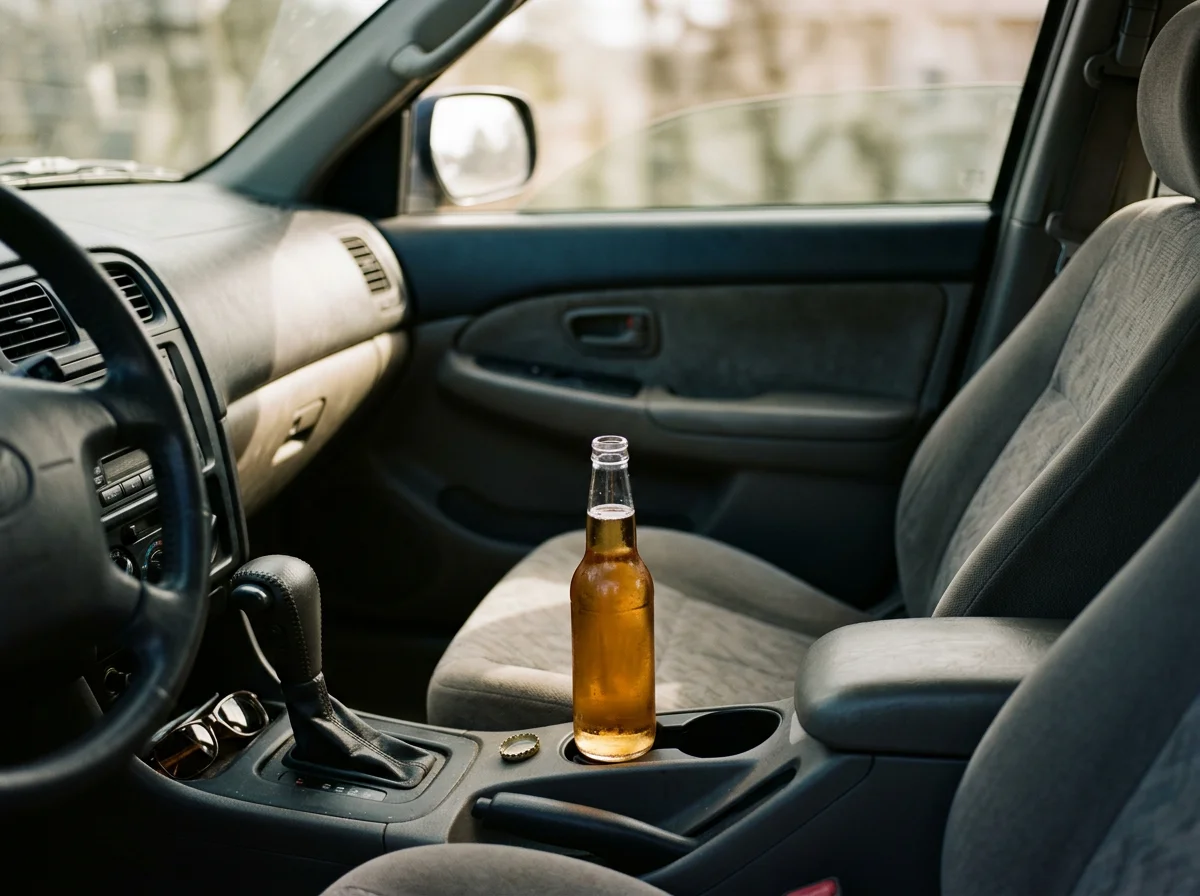
By Sullivan Rice
Many people assume that an open bottle or partially consumed alcoholic beverage in a vehicle is only a problem if the driver is drinking.
In Minnesota, that is not necessarily the case.
Minnesota's open-bottle law places restrictions on both consuming alcohol and possessing certain open alcoholic beverage containers in motor vehicles.
Can You Drink Alcohol in a Vehicle?
Generally, Minnesota law makes it a crime to drink or consume an alcoholic beverage, distilled spirit, or 3.2 percent malt liquor in a motor vehicle while the vehicle is on a street or highway.
The law also addresses possession of an opened bottle or receptacle containing alcohol in a private motor vehicle on a street or highway.
It Does Not Have to Be in Your Hands
Minnesota's statute defines possession broadly. It can include actual possession as well as consciously exercising dominion and control over the bottle or container.
That means the location of an open container inside a vehicle can become important.
The Trunk Exception
There is an important exception.
The law generally does not apply to an opened bottle or receptacle that is stored in the trunk of a vehicle equipped with a trunk. For vehicles without a traditional trunk, the statute provides an exception for certain areas not normally occupied by the driver and passengers. However, the glove compartment is considered an area occupied by the driver and passengers.
There Are Exceptions for Certain Vehicles
Minnesota law contains exceptions for passengers in certain types of vehicles, including qualifying passenger buses, certain commercial pedal-powered vehicles, and limousines.
What Is the Penalty?
Violating Minnesota's open-bottle provisions is a misdemeanor.
But an open-container allegation can also arise alongside other charges. For example, if police stop a vehicle because of suspected impaired driving and discover an open container, the investigation may involve multiple potential offenses.
Why the Details Matter
Open-container cases can turn on relatively specific facts:
Where was the container located?
Was it actually open?
Who had possession or control?
Was the vehicle on a public street or highway?
Was the person a passenger?
Did a statutory exception apply?
Was there another reason for the traffic stop?
Those details can make a difference.
If you have received an open-container citation or have been charged with another offense involving alcohol in a vehicle, Jack Rice Defense can review the circumstances and help you understand your legal options.
