

The ICE Agent Case in Hennepin County: The Real Battle Is Over Immunity
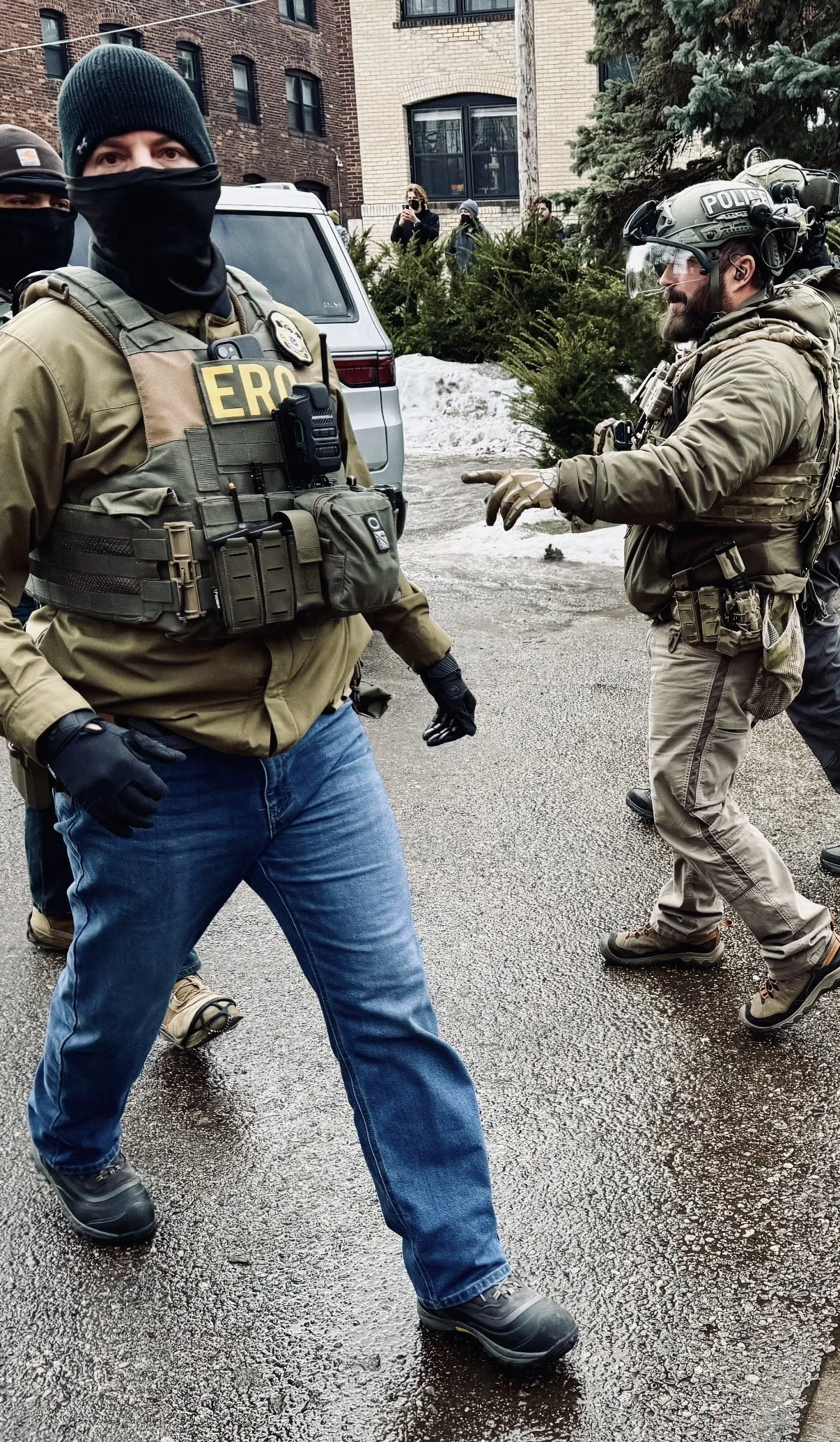
Photograph by Jack Rice during a Direct Confrontation with an U.S. ICE Agent on a Street in the Twin Cities
By Jack Rice, Criminal Defense Attorney, Former Prosecutor, and Former CIA Case Officer
The recent felony assault charges filed by the Hennepin County Attorney’s Office against an ICE agent have sparked a fight over Federal versus State power. The allegations—centered on a highway encounter involving the display of a firearm—are gigantic. But from a legal standpoint, the most important issue in this case may have very little to do with the incident itself.
It’s about immunity.
“This real question may come down to whether the State even has the right to prosecute a Federal Agent.”
And more specifically, whether a federal agent can be prosecuted by a state for actions taken while performing federal duties.
The Constitution Is the Starting Point
I’ve spent my career on both sides of the system—as a prosecutor and now as a criminal defense attorney. Before that, I served as a CIA Case Officer. In each of those roles, I took the same oath: to support and defend the United States Constitution.
That matters here, because this case lives squarely inside it.
Under the Supremacy Clause of the Constitution, federal law—and those acting under it—can, in certain circumstances, take precedence over state law. That doesn’t mean federal agents are above the law. It means there are limits on when and how states can prosecute them.
What Is Supremacy Clause Immunity?
The legal doctrine at issue is often referred to as Supremacy Clause immunity.
In simple terms, a federal officer may be shielded from state criminal prosecution if two things are true:
The officer was performing an act authorized by federal law
The officer did no more than what was necessary and proper to carry out that duty
That second point is where these cases may be won or lost regardless of what the ICE Agent actually did.
Because “necessary and proper” is not a free pass. It is a legal standard—and a demanding one.
Where the Fight Will Happen
The central question will not just be what happened on that highway. It will be whether the ICE agent’s actions fall within the scope of federal authority—and whether those actions were reasonable under the circumstances.
The defense will likely argue:
The agent was engaged in official duties
The situation presented a potential threat
The display of a firearm was a measured and lawful response
The prosecution, on the other hand, will push back hard:
That the conduct was excessive
That it was disconnected from any legitimate federal purpose
That pointing a firearm at civilians crossed a clear legal line
This is not a small disagreement. It is a fundamental legal conflict between two sovereign systems.
Why Immunity Is Not Automatic
One of the biggest misconceptions is that federal agents automatically receive immunity. They do not.
Courts have held that federal officers can be prosecuted by states when they step outside the bounds of lawful authority. The protection exists—but it has limits.
If the agent’s actions are found to be unreasonable, unnecessary, or purely personal, immunity disappears.
And when it disappears, the case becomes what it always was at its core: a state felony prosecution.
Why This Case Matters Beyond One Defendant
This case is bigger than a single incident.
It will help define how far federal authority extends in everyday encounters—outside of task forces, outside of coordinated operations, and into the unpredictable reality of public life.
It will also send a message about accountability. Not just for federal agents, but for how states respond when they believe that line has been crossed.
“Don’t forget that the Renee Good and Alex Pretty cases where they were both shot and killed by Federal Agents are sitting in the wings waiting to see how this case plays out.”
The Reality of Criminal Defense
At the end of the day, this is what criminal defense is about: testing the government’s case, challenging assumptions, and forcing the system to prove—not presume—its conclusions.
Whether the issue is immunity, intent, or use of force, the burden always remains where it belongs: on the prosecution.
If You’re Facing Charges, the Stakes Are Real
You don’t have to be a federal agent for these principles to matter.
If you are facing criminal charges in Minneapolis, St. Paul, or anywhere in the Twin Cities and surrounding counties, your case will come down to legal nuance, factual detail, and how effectively your defense is built.
At Jack Rice Defense, we bring decades of experience—from prosecution to national security—to every case we handle.
Call for a free, confidential consultation at 651-447-7650 or 612-227-1339.
Because when the government brings a case against you, understanding the law isn’t optional—it’s everything.