

When Federal Power Collides with State Prosecution: What the ICE Agent Charges in Minnesota Really Mean
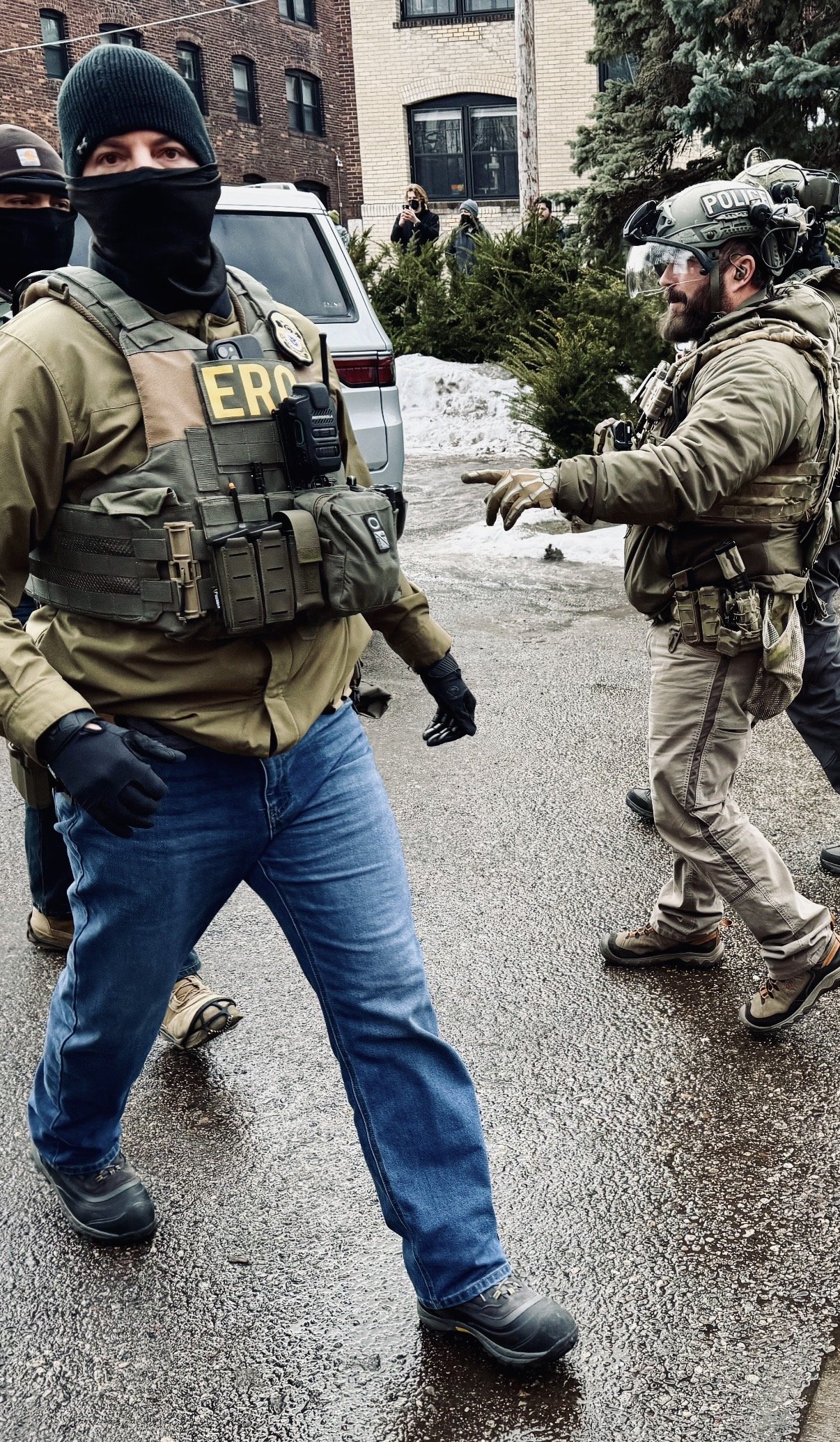
Photograph by Jack Rice during a Direct Confrontation with an U.S. ICE Agent on a Street in the Twin Cities
By Jack Rice, Minnesota Criminal Defense Attorney, Former Minnesota Prosecutor, Former U.S. Federal Officer & Legal Analyst
The recent decision by Mary Moriarty, the Hennepin County Attorney in Minnesota, to charge an ICE agent with felony assault is more than just another headline—it’s a moment that raises serious and complicated legal questions about authority, accountability, and the limits of power. In this kind of fight, who wins? As a former prosecutor and former Federal Officer who swore an oath to the U.S. Constitution, I have some thoughts.
“Remember, these charges come in the shadow of the Renee Good and Alex Pretty shootings by ICE Agents.”
According to prosecutors, ICE agent Gregory Donnell Morgan Jr. has been charged with two counts of second-degree assault after allegedly pointing a firearm at two civilians during a February traffic incident on a Twin Cities highway. According to the Complaint filed by the County Attorney’s Office, what began as a traffic dispute escalated dramatically when the agent, reportedly driving on the shoulder, pulled alongside another vehicle and pointed his weapon at its occupants.
Let’s be clear: these are allegations, and like anyone else charged with a crime, this agent is presumed innocent unless and until proven guilty in a court of law. But the fact that charges were filed at all is significant and really means something.
A Rare—and Important—Legal Moment
Cases like this are exceptionally rare. Prosecuting a federal agent at the state level is not something that happens often. In fact, this may be the first case of its kind in Minnesota tied to the recent surge in federal immigration enforcement efforts. In fact, this is different that the Derek Chauvin case involving the murder of George Floyd. Both State and Federal charges were filed against Mr. Chauvin. He was ultimately convicted of both sets of charges as were mutlple police officer accomplices.
Why does that matter?
Because it forces a legal confrontation between two powerful ideas:
The authority of federal agents to carry out their duties
The right—and responsibility—of states to enforce their own criminal laws
The Hennepin County Attorney has made it clear: federal authority is not a blank check. If a federal agent acts outside the scope of their lawful duties, they can be held accountable under state law.
“Does the phrase ‘Nobody is Above the Law’ really mean anything?”
The Immunity Question
One of the most critical legal issues in this case will be immunity.
Federal agents often assert some level of protection from prosecution when acting within the scope of their official duties. But that protection is not unlimited. If prosecutors can show that the agent’s conduct was unreasonable, excessive, or outside the bounds of lawful authority, immunity may not apply. This is of course in spite of U.S. Vice President JD Vance’s claim of absolute immunity.
And that’s where this case becomes especially important—not just for this defendant, but for future cases involving federal law enforcement operating in Minnesota.
What the Facts Will Matter Most
As with any criminal case, everything will come down to the facts:
What exactly happened during that highway encounter?
Did the agent reasonably believe there was a threat?
Was the use—or display—of a firearm justified under the circumstances? Can officers pull weapons anytime they want
How will witnesses and physical evidence support or contradict those claims? Having 2 witnesses could change the perspective of a jury.
These are not abstract questions. They are the difference between a lawful act of self-defense and a felony assault.
"“Remember, a jury in Hennepin County will know about the 3000 ICE Agents who covered the city and the Good and Pretty killings.”
Why This Matters to You
It’s easy to look at a case like this and think it’s about politics or federal policy. It’s not. At its core, this is a criminal case—and the principles apply to everyone.
Because whether you are a federal agent or a private citizen, the legal system ultimately asks the same questions:
What did you do? Why did you do it? And was it reasonable under the law?
If you—or someone you care about—are facing criminal charges, understand this: the system is complex, and the stakes are high. The difference between a charge and a conviction often comes down to how well your case is understood, investigated, and defended.
Talk to an Experienced Defense Attorney
If you are facing criminal charges in Minneapolis, St. Paul, or anywhere in the Twin Cities and surrounding counties, you need someone who understands not just the law—but how prosecutors build cases and how to challenge them effectively.
Contact Jack Rice Defense for a free, confidential consultation at 651-447-7650 or 612-227-1339.
When everything is on the line, experience matters.